In the first years after birth, the human brain develops at a remarkable pace. Every second, more than a million new neural connections spring into being, shaping a person’s physical and emotional health for the rest of their life.
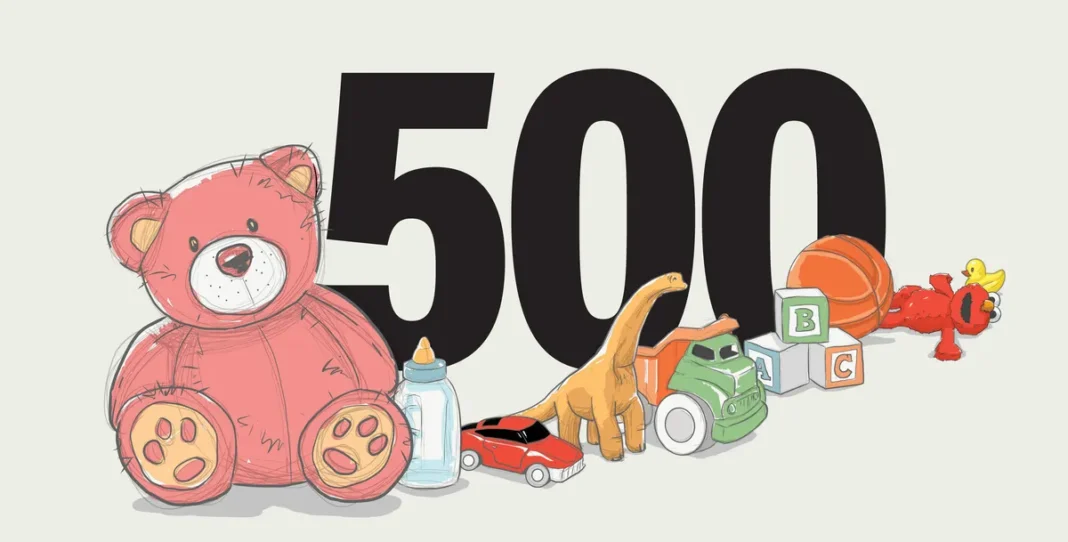
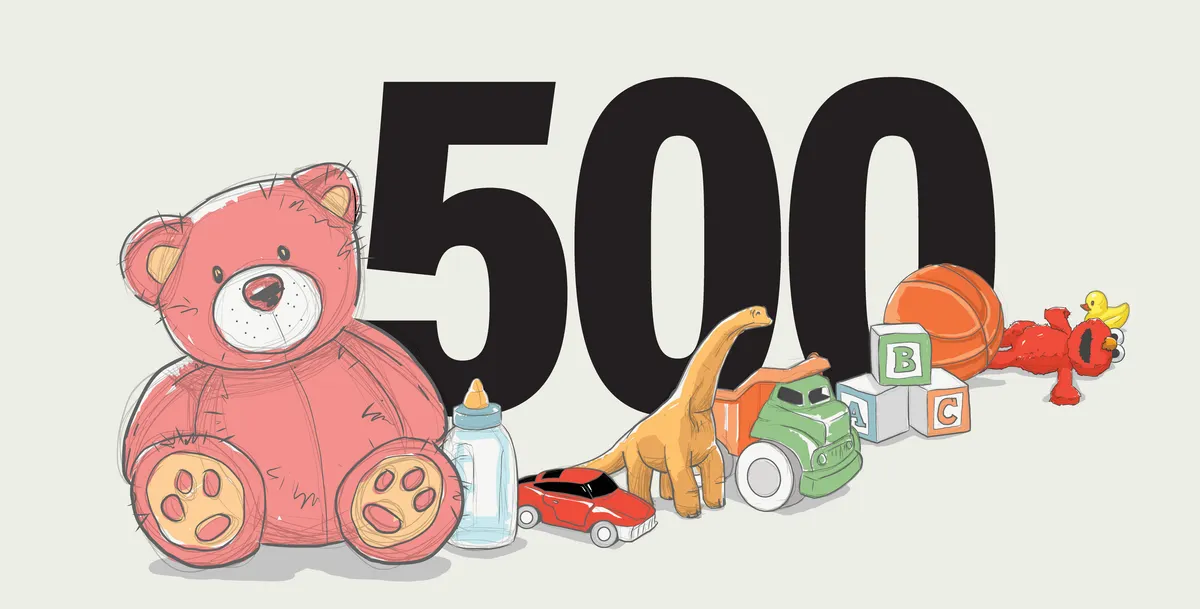
Since the Trump administration entered the White House last year, at least 500 babies and toddlers have spent some of that pivotal time in the custody of U.S. Immigration and Customs Enforcement.
ICE has dramatically increased detentions of children aged 3 and under, holding 25 of them in custody on an average day between January 2025 and March of this year, according to a new analysis by The Marshall Project and MS NOW of records obtained by the Deportation Data Project, a group of academics and lawyers who collect and share federal immigration data. That number is 10 times higher than it was in the previous 12 months under former President Joe Biden. Back then, on an average day, fewer than three babies and toddlers were held at facilities across the country.
Parents in ICE detention have complained of substandard conditions that frequently left their young children sick, isolated and regressing in their physical and intellectual development.
ICE did not respond to a request for comment about the dramatic increase in the number of young children in detention; but, in an emailed statement, an agency spokesperson said families with children receive appropriate food, water and medical care. In a separate statement, CoreCivic –– the private company that operates the primary ICE facility used to detain families –– echoed that its facilities were safe for infants and toddlers.
Marsha Griffin, a pediatrics professor and co-founder of the executive committee of the American Academy of Pediatrics’ Council on Immigrant Child and Family Health, called the period of infancy and toddlerhood “probably the most harmful time of their lives to have them in detention.”
“Our immigration system is breaking children,” she said.
In March, Joani, her husband, and their 2-year-old son, Kaleth, showed up to a check-in appointment with immigration officials in California. Since the family immigrated and sought asylum in 2024, they had never missed a required appointment with immigration officials, according to the family’s lawyer. Nevertheless, that day, ICE took them all into custody.
As the whole family cried, Kaleth’s father was handcuffed and driven away to an adult detention facility in California. Joani and her toddler were taken to the Dilley Immigration Processing Center in Texas, the primary U.S. immigration facility that holds families with children.
At the family’s request, we are identifying Kaleth and Joani by their first names only.
Separated from his father, Kaleth was despondent in the Dilley facility, Joani said in an interview. He repeatedly scooted a tiny table over to a phone that was mounted on the wall, so he could climb up high enough to try to use it. Each time, Joani moved the table away so he wouldn’t fall. Even if he could have reached the phone, contacting his father in another detention center would have been impossible.
Kaleth stopped eating for 12 days. Joani said facility doctors attributed it to depression. When Joani tried to force him to eat, Kaleth vomited. He eventually stopped having bowel movements. Joani watched her son’s face grow gaunt, and his eyes sink into their sockets.
Lori Goodman, the CEO of LEAP, a nonprofit group that supports families with young children in California and has worked with Kaleth’s family, said children his age may express trauma physically, since they have fewer verbal skills.
“He was so distressed that it manifested in his body in not being able to eat or digest.” said Goodman. “The longer a child is in that setting, the more the long-term damage.”
The most recent data available shows many very young children have spent prolonged periods of time in custody. Between Trump’s second inauguration and March of this year, ICE held at least 175 babies and toddlers for longer than a court-mandated time limit of 20 days. A federal judge interpreted 20 days to be the limit for detaining children in a 2015 opinion on the 1997 settlement in Flores v. Reno which governs the treatment of children in immigration detention.
During the last year of the Biden administration, no children aged 3 or younger were held beyond the settlement’s 20-day limit. Biden had ended the practice of family detention in 2021, and the Dilley facility, which had mostly housed families, eventually closed. Trump restarted the practice and reopened Dilley shortly after retaking office.
In a May court filing submitted by ICE as required by the Flores settlement, the agency said it “works to assess cases and discharge minors from custody as promptly as possible.”
Babies and toddlers in ICE custody
Jan. 20, 2024 through March 11, 2026
Alsu and Azat fled Russia last year, fearing that their opposition to the war in Ukraine would land them in prison and their 1-year-old, Amir, in an orphanage.
The family had braced themselves to spend a few weeks in immigration confinement upon arriving in the United States after crossing the southern border without visas, and presented themselves to authorities at a legal port of entry. But, as their incarceration stretched on, first in California and then at Dilley, they watched their once-lively son withdraw and begin hitting himself in the face.
“We came here to escape prison. We wanted to be free,” Azat said through a translator. “But once we arrived in America, we spent four months in detention.”
Dilley didn’t have many toys for toddlers, Amir’s parents said, and some desperate children resorted to playing with rocks. Even though Alsu and Azat knew it was important to read with him, they couldn’t find books in their native language of Russian. Amir’s speech development slowed. Eventually, he stopped saying anything other than two words: “mom” and “dad”.
Griffin, the pediatrics professor, said it’s imperative for parents to talk to their children to help them develop vocabulary. But the fear and stress of incarceration can cause both parents and children to become quiet.
“They don’t want to talk, and no one’s talking to them, not in a normal way,” said Griffin. She noted that the experience can also damage the parent-child bond, as a child witnesses their parent’s loss of control.
Rahil Briggs, a psychologist at the early-childhood advocacy organization Zero to Three, said these types of developmental setbacks can have a domino effect.
“If we miss this foundational time in early childhood when we see all these wonderful things going on in brain development with memory and learning and executive functioning, then it’s just harder than ever to catch up,” Briggs said. ”I can’t learn my ABCs because I’ve got to make sure that I’m safe in this scary situation. And because I haven’t learned my ABCs, now I’m not sure how to do this, and I’m not reading.”
Keeping Amir properly fed was another challenge.
According to Amir’s mother, Alsu, employees at Dilley forced her to wean him off formula, claiming he was too old. The solid food options, Alsu insisted, were not appropriate for a 1-year-old. She described being so desperate to get Amir to eat, that she sucked a spicy pasta sauce off noodles so she could feed them to her son. She and Azat resorted to hiding cereal from the dining hall at breakfast in their socks and hoods for later, so their child wouldn’t go to sleep hungry.
“Every single day, I would break down, hysterical, because my child had gone without proper food,” said Alsu.
After they argued with staff members to get Amir better food, Azat alleges that employees in CoreCivic uniforms woke him up in the middle of the night, threatening to send the parents to separate immigrant confinement centers and Amir to foster care if they didn’t stop complaining.
“As a husband, as a father, I can see the sufferings of my child, I can see how much my wife suffers,” Azat said. “It was horrific for me, because I could do nothing to help them.”
Both Amir’s and Kaleth’s parents said their children suffered fevers and stomach problems during their incarceration at Dilley and that they struggled to get them adequate treatment. Many other parents have reported similar challenges accessing care inside facilities, including waiting for hours in line to get basic, over-the-counter medication.
Elora Mukherjee, a Columbia Law School professor who has represented more than 80 children and parents incarcerated at Dilley over the past year, said that nearly all of her clients in recent months complained about poor medical care.
“Kids at this age also get sick more easily because their immune systems haven’t developed,” Mukherjee said. “Having such young children in a prison setting with hundreds of other kids and parents, it just makes them repeatedly, constantly sick. So they have fevers, they’re coughing, they’re vomiting, they have diarrhea. They are just miserable.”
Amalia and her parents were incarcerated at Dilley when the 1-year-old developed a fever and grew lethargic. Speaking through a translator, her parents said they returned to Dilley’s medical clinic again and again, but were only given Tylenol for her and warned not to complain. When Amalia’s mother, Kheilin Valero Marcano, went back to the clinic after her daughter lost consciousness, she recalled asking clinic employees, “How long are you going to leave her like this? Are you going to let her die?“
According to the family, Amalia eventually spent more than a week in an outside hospital, after her oxygen levels dropped to dangerously low levels. There she was diagnosed with COVID-19, an ear infection, pneumonia, bronchitis, and RSV, a common, but potentially serious, childhood illness that affects the lungs.
According to ICE’s standards, facilities should transfer sick people to an outside hospital if they cannot provide adequate care onsite.
Leecia Welch, a lawyer with Children’s Rights who has visited Dilley more than 10 times, said that babies and toddlers, many too young to receive certain vaccinations, had some of the most troubling medical cases she’d seen, calling the situation “the most gut-wrenching.”
Welch recalled mothers in detention describing how stress and lack of nutritious food made breastfeeding difficult. Marcano said Amalia would cry throughout the night, because she’d tried to nurse and nothing would come out.
Other parents, whose babies drank formula, have stated in court documents that the facility did not provide enough bottled water to hydrate powdered formula, and purchasing additional water at the commissary was, for many, prohibitively expensive. Tap water at the facility, families said, smelled foul and made children sick.
Parents also described difficulties getting children to sleep. The lights in the Dilley facility were kept on all night, and toys that can help kids sleep are prohibited in living areas.
“They can’t go to sleep with a stuffed animal,” said Welch “They can’t go to sleep with a security blanket, that’s just not allowed.”
Representatives for ICE and its parent agency, the Department of Homeland Security, did not answer specific questions about the sorts of conditions experienced by Kaleth, Amir, or Amalia. In a past social media post, Homeland Security disputed Amalia’s family’s claims and insisted she “immediately received proper medical care.”
Brian Todd, a CoreCivic spokesman, responded in an email that the Dilley facility provides toddlers and babies necessary supplies, including formula, healthy food and clean drinking water.
An ICE spokesperson made similar claims in an emailed statement and noted that the agency “is working rapidly and overtime to remove these aliens from detention centers to their final destination — home.” In a May court filing, an ICE report stated that people are provided with an eye mask when they arrive at Dilley and, following complaints, the facility switched to lower-intensity lighting, though they remain on all night for security purposes. Agency officials also stated in the filings that water quality is monitored, babies under the age of 1 receive bottled water to make formula, and children have access to outdoor play structures, toys, multilingual books, and age-appropriate meals and snacks.
A court filing from lawyers for detained children called ICE’s claims “fanciful.”
ICE released Kaleth and his mother in April, two weeks after their incarceration, and they were later reunited with Kaleth’s father. According to Mukherjee, Kaleth had not eaten solid food the entire time. In the car from the airport, he devoured four packets of applesauce.
Kaleth has since recovered remarkably, said Goodman, the LEAP CEO — a testament to the family’s resilience and the strength of their parental bonds. She’s seen how Kaleth’s mother looks into his eyes, and comforts him when he is distressed.
“That is so powerful at counteracting the abuse that our government is perpetrating,” Goodman said.
Amalia and her family were released in February after spending two months in Dilley.
Amir and his parents were also released, under supervision, in January. The toddler, now 2 years old, is laughing and speaking more, and he has stopped hitting himself. His parents say he seems closer to the happy child he was before ICE imprisoned him.
Even so, it’s too early to tell what the long-term effects of child incarceration will be on the hundreds of babies and toddlers who have gone through ICE detention since Trump re-entered the White House.
“The long-term damage caused by prolonged toxic stress — by essentially abusing these children — we’re going to see those effects. They’re going to impact every child who was there for many, many years to come,” Goodman said. “It’s incalculable the amount of damage that is being done.”