If Danny Boyle’s 28 Years Later was a hauntingly tender memento mori for a dying world, Nia DaCosta’s sequel, 28 Years Later: The Bone Temple, is a visceral, grounded investigation into what remains once the flesh has rotted. DaCosta takes the directorial reins from Boyle, infusing Alex Garland’s script with a sense of horror that feels more subdued and intimate, yet no less incendiary. Where Boyle gave us the punk-rock kinetic energy of survival, DaCosta offers a ferociously weird and idiosyncratic look at the ruins of Britain through different eyes, moving between the carnage of a new cult and the heavy, contemplative silence of a monument built for remembrance.
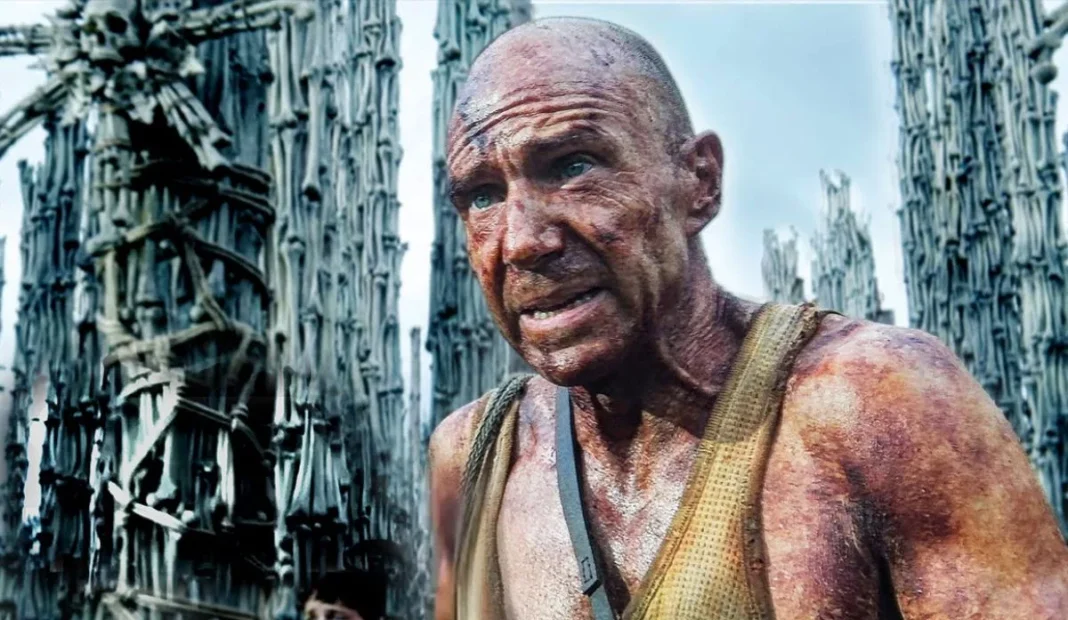
To understand the weight of The Bone Temple, one must look back at its predecessor. In the first film of this trilogy, Boyle and Garland rewrote the genre’s DNA by focusing on the slow disintegration and stubborn endurance of humanity. We watched Spike (Alfie Williams) navigate a coming-of-age odyssey that moved from brute violence to a radical, heartbreaking grace as he sought to save his mother, Isla (Jodie Comer). That film ended with an ode to the inevitability of death, anchored by Ralph Fiennes’ Dr. Kelson and his titular bone temple (an iconic and poetic horror image). The trilogy’s second half picks up immediately after those emotional events, but it expands this world. It’s no longer focusing on the terror of the infected, but on a nightmare of human making.

The film opens with a jarring sensory assault: deafening screams followed by a vacuum of silence, before Cillian Murphy’s voice says “Hello?” across the screen (a haunting echo from the franchise’s 2002 inception). We remember where we are and what used to be. Now, the story finds Spike thrust into the chaotic world of the Fingers, a satanic cult led by the charismatic and deviant Sir Lord Jimmy Crystal (Jack O’Connell). Jimmy Crystal is a campy figure of twisted gaiety in a velour tracksuit, with a tiara placed atop his blond hair. But he’s also violent and sadistic; he and his ilk snicker at even the smallest amount of pain inflicted on others. O’Connell fully embraces the insanity of the role, but there is also a brokenness underneath. He’s the perfect representation of how this world has transformed and corrupted the innocent. In the first film, we see Jimmy as a boy witnessing his priest father open his arms wide and willingly become infected. As a result, he has fully embraced hell’s kingdom and seated himself on its throne with a twisted ideology, introducing a new kind of evil into the world.
In the previous film, Spike had to fight the infected. Here, he learns that the real threat to humanity is humans themselves. The Fingers treat violence as charity, a twisted mercy they perhaps view as preferable to infection, making them just as terrifying as the sprinting monsters. Spike is taken by the Fingers and forced to fight to the death, or die trying. These opening scenes gush with the blood of a cut artery, introducing the twisted minds of the cultists as they observe a terrified Spike nearly escape death and earn his place, even if only for survival. Williams portrays this version of Spike with a maturity that feels like the growth of an actor after a long break between films, not something shot back-to-back. He embodies how the character has transformed since we last saw him, carrying a dread of what is to come. He is a boy in adult situations he’s not ready for, yet hardened by all he has seen.
Spike and his journey to save his mother were the central focus of the last film. And while he doesn’t have much to do here in terms of dialogue, his character remains the emotional throughline that impacts these two films in their entirety. This second chapter mostly resides in the isolated path of Dr. Kelson. While the Fingers represent religion through their worship of Satan, Kelson embodies the other side of the coin: science. He remains to bone what a sculptor is to clay, and his temple is never finished. The narrative’s most profound arc is Kelson’s evolving relationship with Samson (Chi Lewis-Parry), an Alpha infected.
‘28 Years Later: The Bone Temple‘ Redefines Horror Through Human Corruption

Through close-ups, The Bone Temple places great emphasis on eyes; the eyes of Samson and Kelson as they first connect and build trust, and later, when Kelson strikes Samson with morphine-tinged darts. In these moments, Kelson provides tranquillity to a traditionally monstrous being. There is peace behind Samson’s eyes as he lets the morphine take hold. Slowly, DaCosta finds the missing humanity of this world again behind the infected gaze. Through Samson’s senses, we see the world as he once knew it. Lewis-Parry’s performance relies on vulnerability and expression, portraying Samson not as a monster, but as a being rediscovering existence through drugged lucidity.
This isn’t just Samson’s story. Kelson is equally vital, and with the focus shifted away from Spike, we gain a deeper understanding of who he is. We see how Kelson lives and survives, both physically and mentally. With his collection of records, he uses music to remember, to feel. This culminates in the film’s most unforgettable sequence: Kelson, thanks to a generator, blasts his record of Iron Maiden’s “The Number of the Beast,” performing a pyrotechnic lip-sync dance. It’s Fiennes unlike we’ve ever seen him.
The Bone Temple is a reminder that even in a world that seems hopeless, humanity will always emerge from the darkness. This sequel sees DaCosta successfully blend her style with Boyle’s and ground the horror in the depths of us, down to our bones. The film ends with an air of anticipation for what’s to come, and there is still so much story left to tell.
Grade: A
Follow us on MSN for more content like this.

28 Years Later: The Bone Temple
Dr. Kelson finds himself in a shocking new relationship – with consequences that could change the world as they know it – and Spike’s encounter with Jimmy Crystal becomes a nightmare he can’t escape.