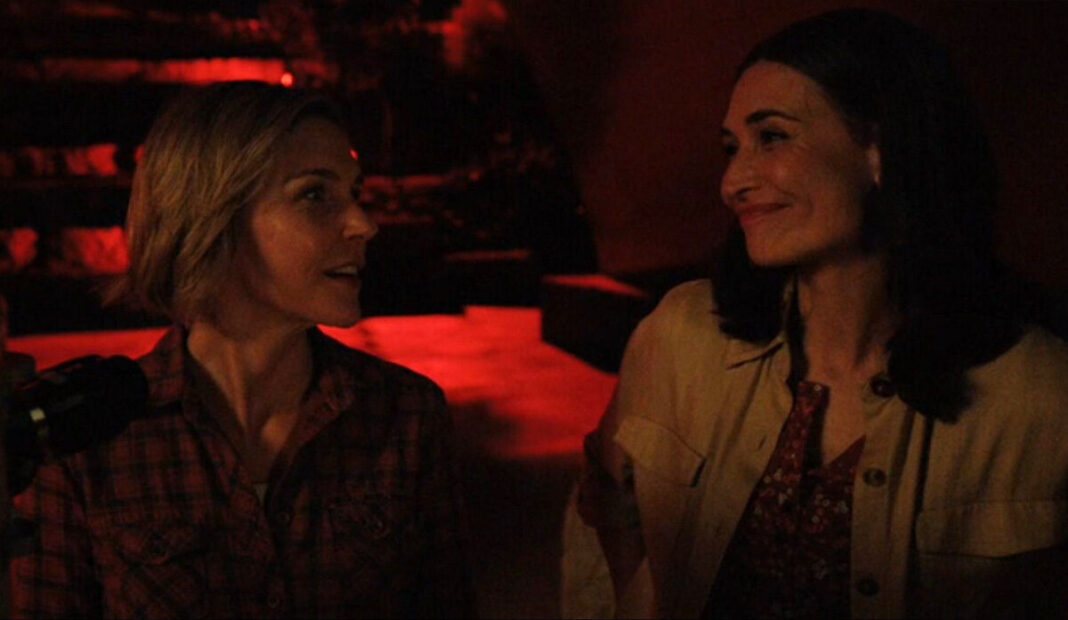
This article contains spoilers for Apple TV’s Pluribus.
Can you imagine coming back from a work-related trip only for your wife to suddenly die, while the entire world succumbs to a collective, hive-like consciousness? That’s what happens to the lead of the newest Apple TV series created by Vince Gilligan, Pluribus. Carol Sturka, brilliantly portrayed by Rhea Seehorn, finds herself in quite a predicament. And it doesn’t help that she has questions, as anyone would in such a situation. I know I certainly would.
Imagine my surprise when I learned that some people absolutely despise Seehorn’s character. Not in an “annoying” kind of way, but in a let me write long paragraphs to make sure everybody knows how much I hate this character way. You cannot possibly imagine my shock when I saw countless people complaining. I wanted to reply to each comment, asking, or explaining. It brewed in my mind for days and eventually led me to this reflection. I need to talk about Pluribus’ Carol Sturka: her rage, her sadness, her hate, and her loneliness.
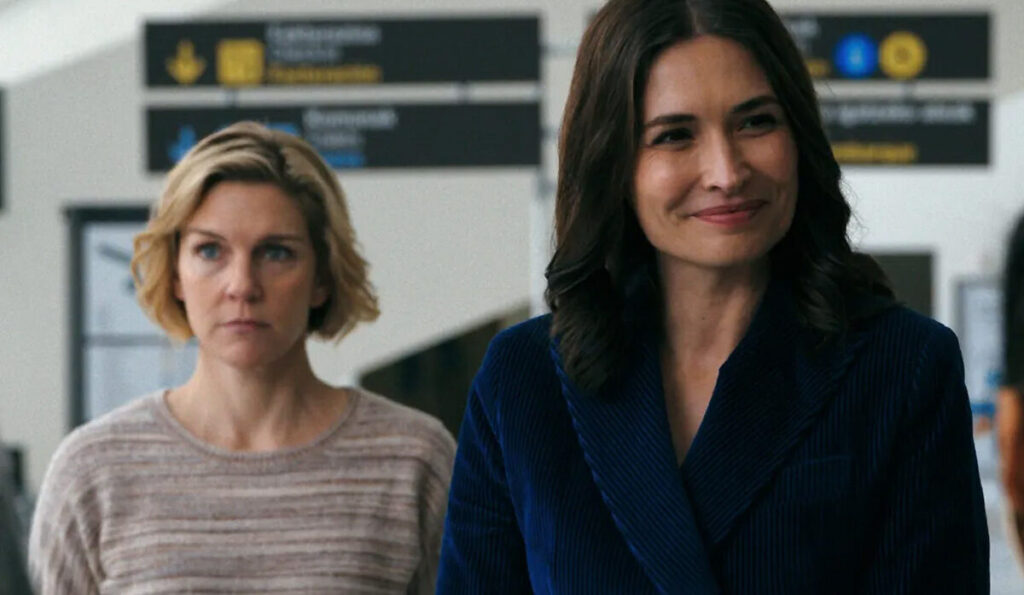
It’s not because I’ve personally become a huge enthusiast of the show. It’s not even because Pluribus features Karolina Wydra in the role of Zosia, which happens to be my name. What are the odds, right? It’s simply because I don’t believe Carol Sturka deserves all this hate. While I see plenty of people who understand her actions, there are many who don’t. Naturally, as a woman and a lesbian, it’s easy for me to relate to Carol. I belong to the LGBTQ+ community, I have a wife, two dogs, and a good life. Because of that, it’s very easy for me to understand Carol’s grief for wife Helen at the beginning of the series and her continuous rage.
As everyone falls victim to the virus in the show that takes over their consciousness, Seehorn’s character loses not only her community and her friends, but also the one person who was her safe space, her safe haven. You can see this clearly in the moments right before: Helen (Miriam Shor) is there to give her gum, to call her out on her bullshit, and to check her. As the show progresses, we can deduce that they’ve been married for a long time, which makes Carol’s grief and anger all the more understandable. Seehorn’s Carol loses the most important person in her life, but not before Helen succumbs to The Others, wearing that creepy, saccharine smile. Which brings me to a point: Freedom Falls.
Pluribus Turns Carol Sturka’s Rage Into a Survival Instinct
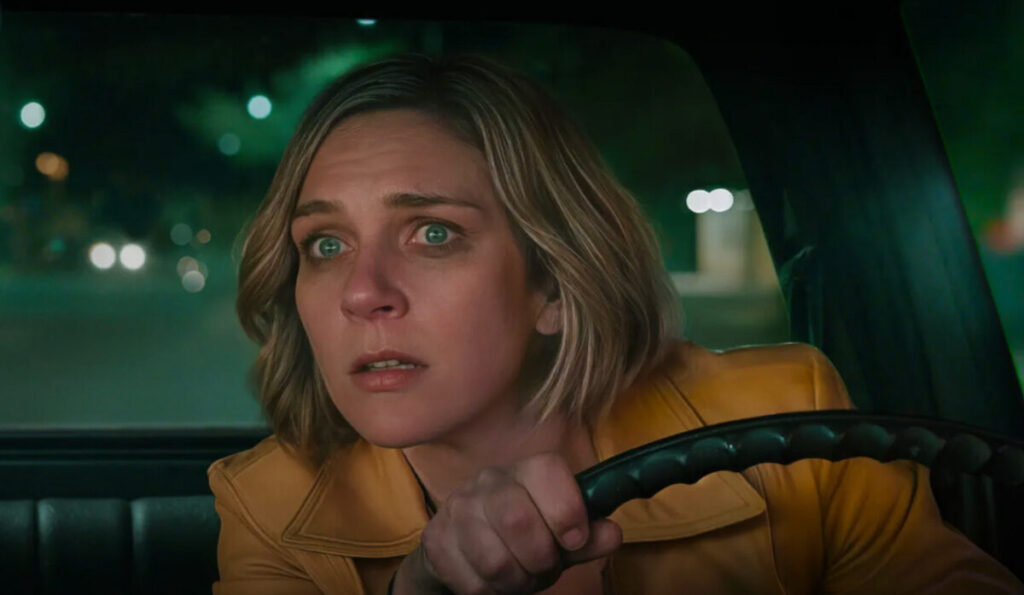
In episode 4, titled “Please, Carol,” written by Alison Tatlock and directed by Zetna Fuentes, Carol discovers that barbiturates have a strong truth-telling component. After testing it on herself (one of the most amusing scenes in the series), she plans to use it on Zosia in an attempt to learn how to reverse the virus. During a conversation with Zosia, who, by the way, is still recovering from a hand grenade, we learn that Carol was sent to a conversion camp called Freedom Falls by her mother. “It was a terrible experience for you,” Zosia says. “The counselors there were some…”
She trails off, as Carol finishes the sentence for her:
“Some of the worst people I have ever known. And they smiled all the time. Just like you.”
Through her conversation with Zosia, we learn how the counselors tried to change Carol, just as the hivemind is now trying to “change” her, highlighting the painful irony of it all. When you think about that scene, about Freedom Falls and then you return to episode 1, the forced kiss between the hivemind’s male member and Carol when they attempt to infect her becomes even more traumatizing. We can only imagine how triggering that moment must have been for her. Given all of this, I find Carol’s rage and negative worldview entirely understandable.
Carol’s confusion and distress deepen with the arrival of Zosia, a member of the hivemind carefully selected by The Others and presented to Carol as a female version of one of the male protagonists from her novel: Raban. In an amusing sequence, Carol runs to her house, grabs her novel, and holds it up next to Zosia’s face. She immediately recognizes the resemblance. This leads to the revelation that Carol’s fictional character was originally a woman and that the only people who knew this were Helen and Carol. Which means the hivemind is now using Helen’s memories to further manipulate Carol, especially knowing that she’s attracted to women. It’s another mean of control and that’s how Carol sees it when she demands from them to never use Helen’s memories.
Their dynamics are one of the most intriguing parts of the show. Carol’s attraction to Zosia is revealed to us (and to Carol herself) during the barbiturate scene. However, she doesn’t take advantage of it, unlike another immune individual, Koumba Diabaté (Samba Schutte), who has no qualms about indulging in carnal pleasures. We also see Carol’s respect for consent in a scene where Diabaté asks her permission for Zosia to join him.
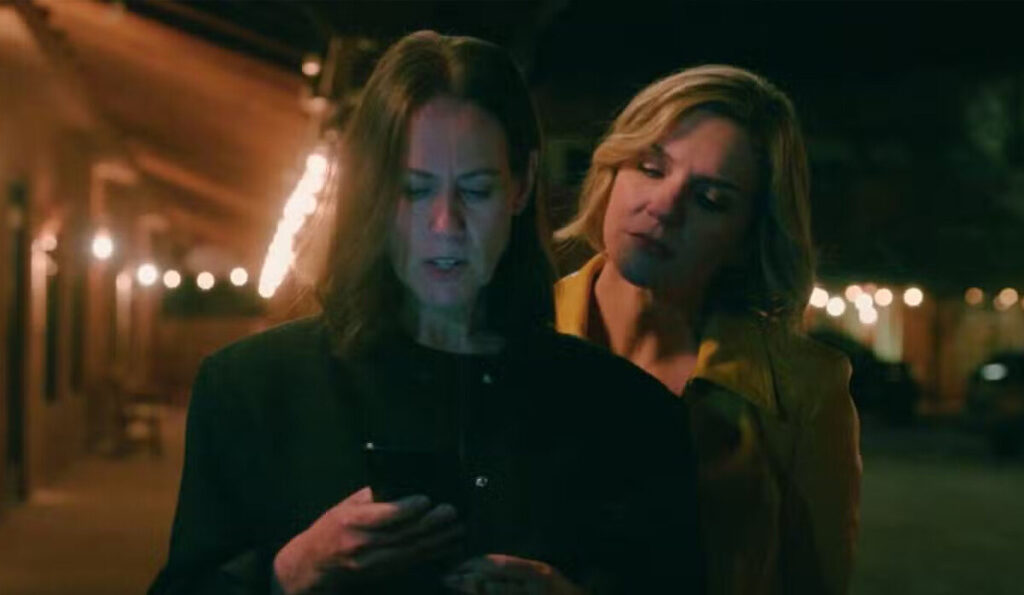
Seehorn’s character views The Joining as a loss of self, especially given her past of having to hide her queer identity, and she fiercely guards her right to refuse. She extends this belief to those who are “infected,” arguing that the individual who was once Zosia cannot consent, because her individualism and sense of self is being smothered by the collective consciousness. Now, we are yet to tell if her view on that changes but one thing we know for sure is that the newfound niceness is about to get her some answers in the upcoming episode titled „Charm Offensive”. (Editor’s note post-episode 8: Reader, Carol’s weaknesses and the Hive’s manipulation won this one…)
Of course, Carol is human, and she makes mistakes. Among them is the hand grenade incident, which injures Zosia, and later, Carol’s attempt to drug her to get answers leads to Zosia suffering cardiac arrest. The hivemind’s response to Carol’s actions is manipulative in its own right. They decide to “take a little space,” leaving Carol in an unusual predicament: she is abandoned by everyone. At first, she ventures out to learn more, discovering things like human-derived protein (which, ewww). Her rage and need for answers drive her forward. But as the days pass, Carol’s rage, happiness, and sense of freedom slowly give way to loneliness.
We also cannot ignore how the remaining immune individuals essentially shun Carol for daring to try to save the world. In the episode “HDP,” written by Vera Blasi and directed by Gandja Monteiro, Carol discovers that the group stays in touch while intentionally excluding her. When she goes to the restroom and breaks down in tears, it hits close to home. For anyone who has experienced bullying or social exclusion, it’s painful to realize that it doesn’t always stop in adulthood. Even more so, in this case, it doesn’t even stop when you’re amongst only few others standing in this post-apocalyptic narrative. And the feeling has to be so much stronger to Carol, as she’s not only abandoned by the hive but the rest of humanity.
That loneliness is best showcased in the episode “The Gap,” written by Jenn Carroll and directed by Adam Bernstein. Carol swims in hot springs, sings out loud, blows up fireworks, and steals Georgia O’Keeffe’s Bella Donna. Yet the spark fades day by day. After 48 days, even Carol needs human (sic!) touch.
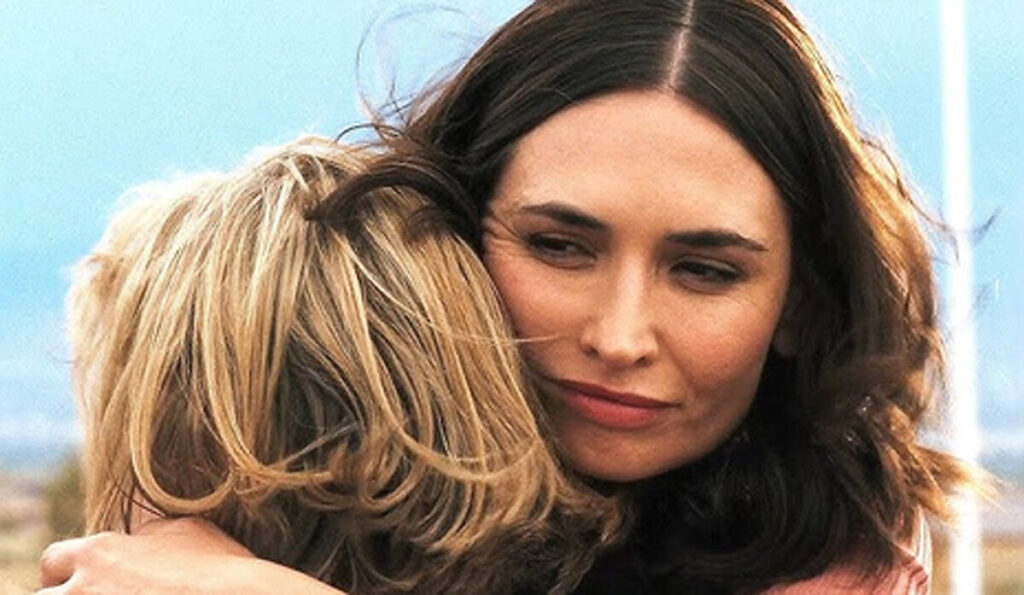
In the emotional final scene of the episode, Zosia finally returns. Carol steps outside, slowly approaches her, and then collapses into her arms, sobbing uncontrollably. The moment is deeply telling: it symbolizes our fundamental need for community and physical touch. Being completely alone for over forty days would make anyone a little stir-crazy. I know it would for me.
This brings us to another character: Manousos, brilliantly portrayed by Carlos-Manuel Vesga. As we watch him undertake a dangerous journey to reach Carol, we see him repeatedly reject the hivemind’s help. He is stern, angry, and unkind toward them. Yet they continue to ask. At one point, Manousos says: “Nothing on this planet is yours. You cannot give me anything, because all that you have is stolen. You don’t belong here.” His goal mirrors Carol’s: he wants to save the world, a phrase he repeats as he learns English along the way. Yet no one calls him negative. Or annoying. Or “too much.” So why is Carol considered too much, but not a character with virtually the same outlook and attitude? I’ll let you ponder that.
One thing is certain: we can theorize but we can’t predict what will happen next in Pluribus. With Carol now breaking and softening her stance toward Zosia and the hive, what is her true goal? I believe she knows exactly what she’s doing. That may be symbolized by O’Keeffe’s Bella Donna, which is known to be a poisonous plant. Perhaps we’re meant to see Zosia the same way. As the painting enters Carol’s home, so does Zosia. Or maybe Carol is simply tired of fighting?
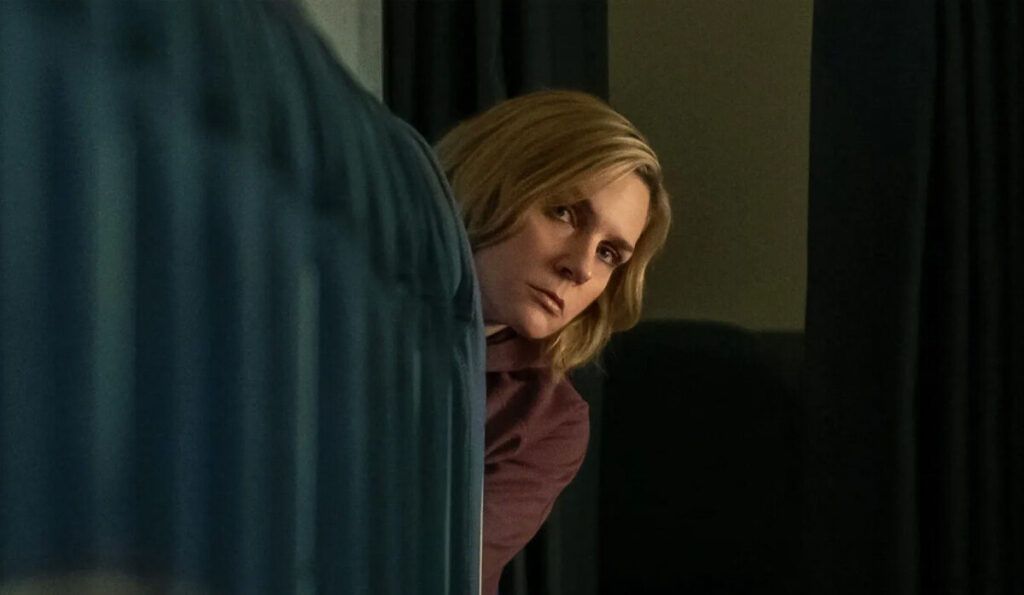
Without a doubt, Gilligan’s Pluribus is one of the best television shows of the year. It’s not only a thought-provoking commentary on the rise of AI and technology, but also a cautionary tale about control and the loss of individualism. For me, the character Seehorn portrays is not only deeply relatable, but one that represents resistance, and the rise against the system.
With such strong cast ensemble as Seehorn, Wydra, Vesga and plenty of creative and funny cameos throughout, Pluribus is a must-watch so don’t wait too long so we can chat about it during the holiday break.
Pluribus is streaming on Apple TV.
Follow us on MSN for more content like this.
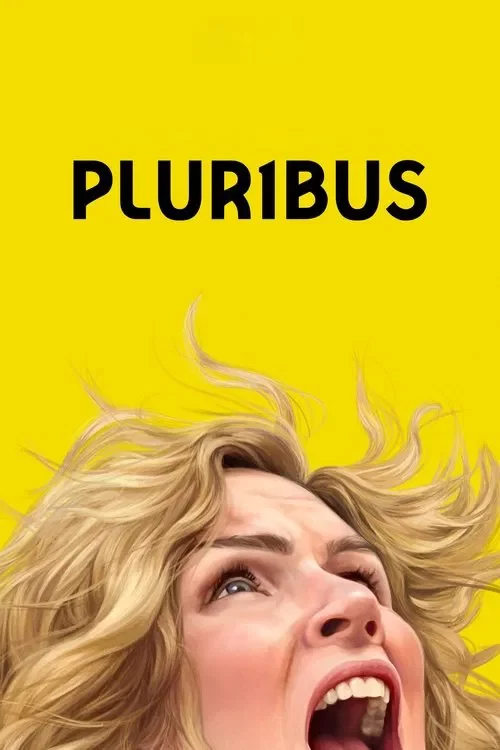
Pluribus
The most miserable person on Earth must save the world from happiness.